
Wired for Success:
High-Performance Computing Workshops Empower UO’s Talapas Users
By Jason Stone, Editorial Content and Communication Specialist (UO Libraries)
Talapas Photos by Freddy Lopez, Research Systems Engineer (Information Services)
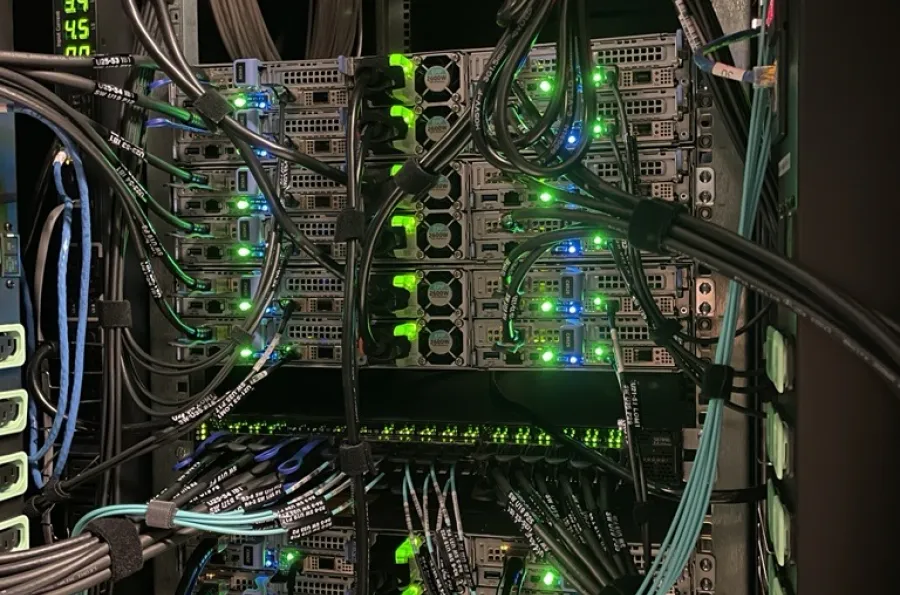
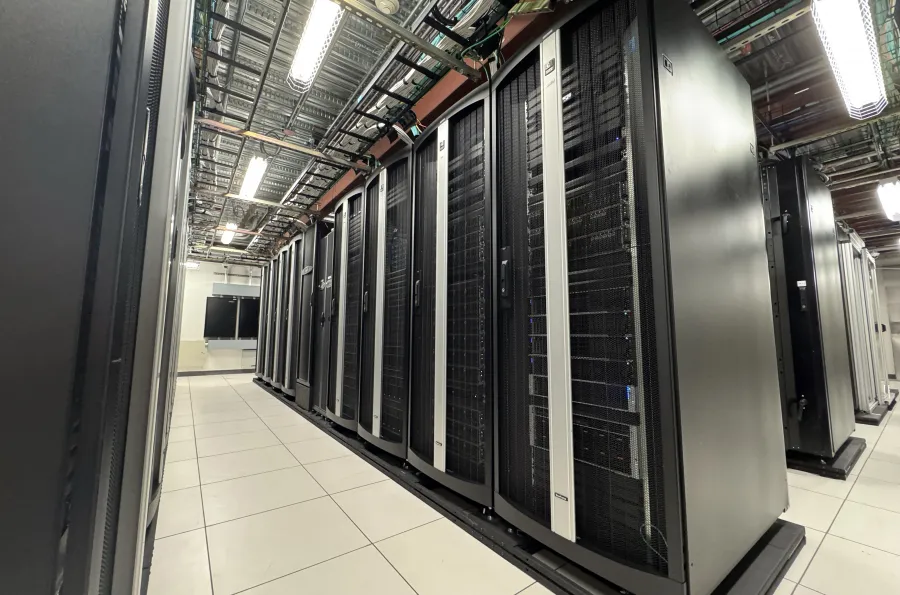
In the basement of the Allen Hall Data Center can be found one of the most powerful computers in the Pacific Northwest.
Named for the Chinook word for coyote—an educator and keeper of knowledge in Indigenous tradition—Talapas is the heart of UO’s Research Advanced Computing Services (RACS). Accessible to researchers across schools and disciplines, this high-performance supercomputing cluster can perform over 250 trillion calculations (250 teraFLOPS) per second, making it roughly 2,500 times faster than a standard desktop computer.
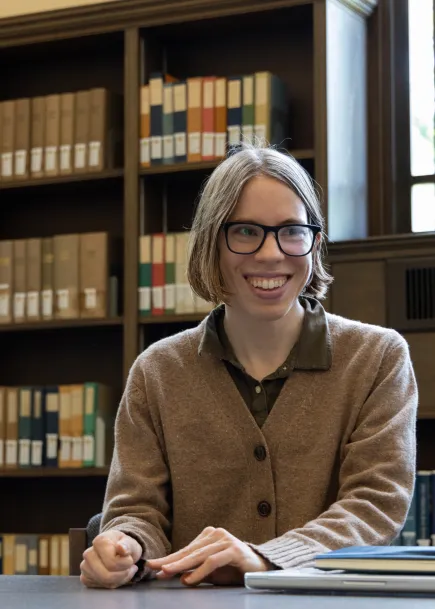
"If the code required for your research runs out of memory, takes too much time to complete, or requires specialized computing hardware, you could probably benefit from using Talapas,” says Erin Winter, the research data management librarian at UO Libraries.
Each user on Talapas is either sponsored by a University of Oregon Principal Investigator (PI) who leads a research group on campus, or is a student enrolled in a UO course that integrates Talapas. The HPC cluster powers cutting-edge research in fields as diverse as genetics, linguistics, materials science, biochemistry, economics, astrophysics and more.
While Talapas is available to a growing community of researchers across disciplines, using this super-powered technology is not always intuitive.
“Just because you know how to code doesn’t necessarily mean you know how to use a supercomputer,” Winter says. “Even people with prior programming experience may need to learn new skills to take advantage of the power of Talapas.”
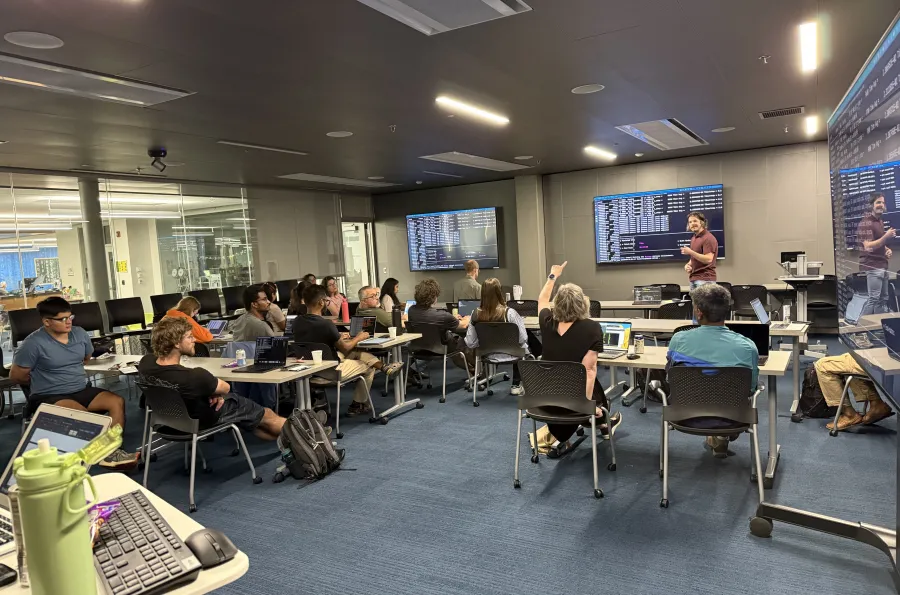
A member of the UO’s Research Computing Faculty Advisory Committee, Winter has worked with RACS to expand support for high-performance computing at UO Libraries since 2024. In addition to providing consultation services for Talapas users, she facilitates and serves as co-instructor for the annual workshop series Introduction to High-Performance Computing. This crash course in essential Talapas skills is held every fall term in Knight Library’s DREAM Lab, a collaborative space that’s wired for digital instruction.
Drawing on her professional experience as an educator, researcher and software engineer, Winter designs workshop sessions with learners from diverse backgrounds in mind. Lending their perspectives and expertise are co-instructors Freddy Lopez and William Winter, research engineers with RACS, and Jolinda Smith, MR physicist with the Lewis Center for Neuroimaging (LCNI). Together, they’ve developed and refined a curriculum that enables a growing, interdisciplinary community to conduct research made possible by supercomputing.
“We want even more people to learn about Talapas because it’s such a unique and exciting resource,” Winter says. “And guidance for researchers doesn’t end after the workshop does. We offer continued support through RACS office hours, support tickets and Data Services consultations at the library.”
Reserve Your Seat: Introduction to High-Performance Computing Workshops
Schedule and Curriculum:
- Introduction to Bash and HPC, October 13, 1pm—3pm
- Bash Scripting on Talapas, October 15, 1pm—3pm
- Talapas Essentials, October 20, 1pm—3pm
- Running Jobs with Slurm, October 22, 1pm—3pm
- Running Workflows on Talapas, October 27, 1pm—3pm
- OnDemand Apps and JupyterLab, October 29, 1pm—3pm
Registration is required. Open to UO students, faculty, and staff. All class sessions are held in the DREAM Lab (Knight Library Room 122).
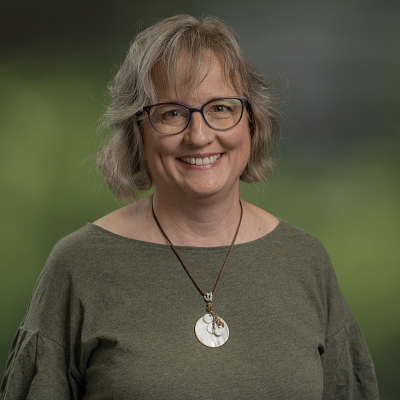
“A couple of years ago the library was hosting a coffee-and-coding weekly get together. I attended a couple of them and started talking with Erin and [Head of Data Services] Gabriele Hayden about how LCNI users could use some training in using the HPC cluster. . . . I now provide the “user experience” perspective for the workshop and teach the Jupyter Lab segment.”
Jolinda Smith, MR Physicist, Lewis Center for Neuroimaging (LCNI)
Talapas by the Numbers
Inside the Research Cluster: Going Under the Hood of Talapas
What makes a supercomputer “super?” Its superpowers are coordination and speed.
A supercomputer cluster like Talapas consists of hundreds of small computers called nodes. Each node is equipped with its own memory and a number of processors (the parts that do all the calculating). To handle enormous parallel computing tasks, Talpas uses a combination of central processing units (CPUs), like the kind that operate most home computers, and high-powered graphic processing units (GPUs). In gaming, GPUs help to accelerate the generation of visuals—in supercomputing, they turbocharge the calculations.
Supercomputers rely on parallel processing. Unlike traditional serial computing—which runs instructions one after another on a single processor—parallel computing performs many calculations in tandem. Large problems are split into smaller, independent chunks so that multiple processors work on separate pieces of the calculation all at once. This approach allows supercomputers to handle massive data sets in “real time.”
Another key to a powerful supercomputing system is an incredibly fast network, or interconnects. This means the vast complex of physical wiring, switches and protocols that ties together all the independent nodes and allows them to cooperate in tackling complex problems.
But it’s not just the technological marvels that make supercomputers special. A huge amount of expertise and human infrastructure is required to keep these machines running and make them available to researchers, who generally tap into supercomputing power remotely.
At the UO, Talapas is architected and managed by Research Advanced Computing Services (RACS), a department within Information Services. In addition to consultation for faculty researchers, they also enhance student success by facilitating access to high-performance computing resources for courses and degree programs across campus, including bioinformatics, biology, business, chemistry, computer science, genomics, earth science and physics programs.
Labs and faculty members interested in using Talapas are encouraged to contact RACS or drop by Talapas Office Hours.
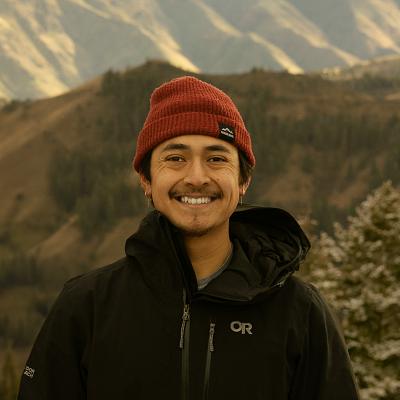
“Many labs have struggled with compute problems, whether that's slow data processing or being unable to run the programs they need. Once they discover Talapas, they no longer must run everything on their own machines. Their workflows become faster and more efficient, and they get more science done in less time.”
Freddy Lopez, Research Systems Engineer, RACS
Talapas Users by the Numbers

“HPC doesn't have to be hard and it doesn't have to be scary. A misconception about Talapas is that you need a really, really, really big problem. A lot of our users don't really want to run a really big problem. They just want to be able to do thousands of small problems.”
William Winter, Research Software Engineer, RACS