
From Creativity to Collaboration: Spaces That Work for You
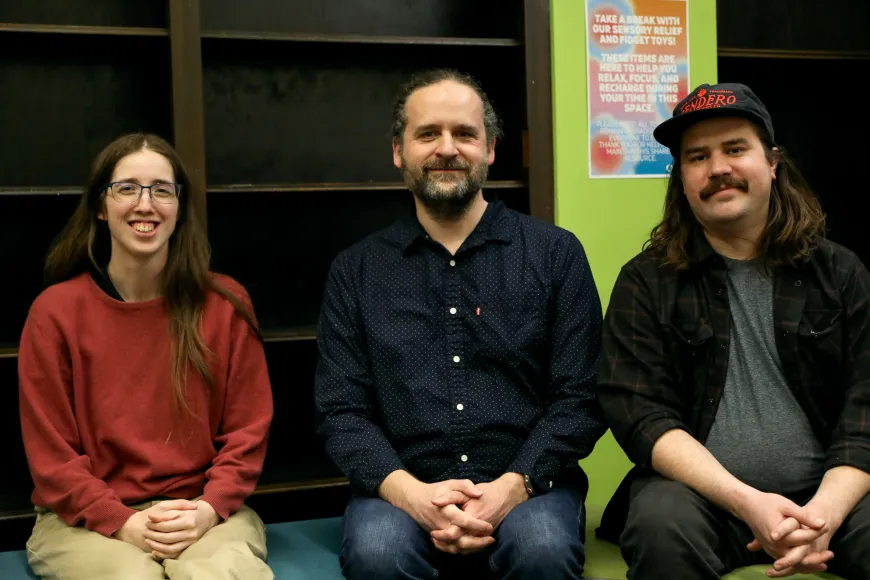
At the University of Oregon Libraries, research and learning occupy a variety of spaces. Meet the staff members who help bring our learning environments to life.
By Izzy Smith and Harper Lombard
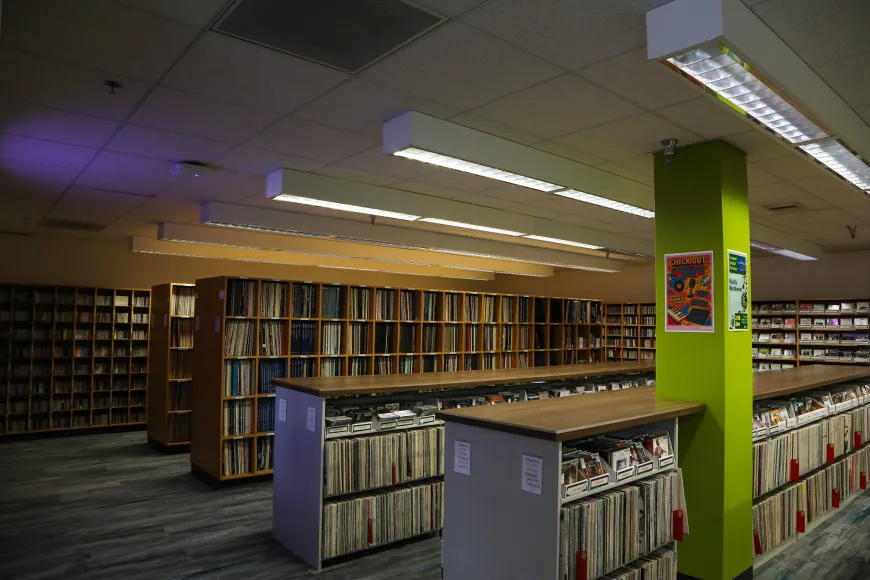
In UO Libraries learning takes many forms, and so do the research and learning spaces. Some provide quiet zones for focused graduate study, while others are equipped for on-site practice with musical instruments. The opposite of static facilities, these spaces are constantly being adapted to meet the evolving needs of the campus community. The goal is to provide students and faculty members with the latest tools and room for exploration and knowledge creation.
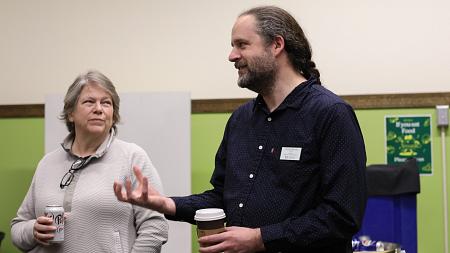
Picture the library's learning spaces operating as a train: Jimmy Murray would be the conductor, responsible for seeing that all systems are running smoothly.
“I'm responsible for technology planning plus staff and student supervision, all while ensuring that our beliefs align with the library’s overall mission for supporting teaching, research and creative experimentation,” says Murray, the research and learning spaces manager with UO Libraries.
Breaking down misconceptions about who can use the learning spaces is another one of his central philosophies.
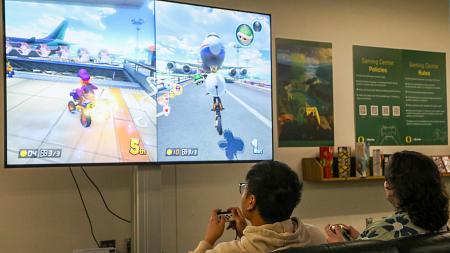
“It doesn’t matter if you're an English student and you want to learn more about gaming, or you're a music student and you want to learn about laser cutting,” says Murray. “We have people here to teach you.” Students can check out video games and consoles, or create 3D prints for class projects or just for fun.
Combining long-term planning with community feedback is Murray’s perfect recipe to shape spaces that evolve alongside students as they learn, create and conduct research.
“Our plan to build a gaming center was advertised campus wide. We wanted to ask them what they truly wanted in a gaming center, and this is true for all our spaces. We actively do outreach to students,” Murray explains.
Liaison to Murray are Research & Learning Spaces Assistants Eowyn Boosinger and James Daley who oversee resource spaces in the Allan Price Science Commons and Research Library and in Knight Library, working directly with the students who use them.
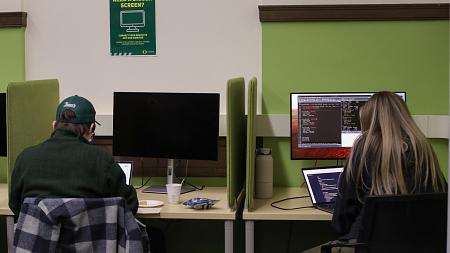
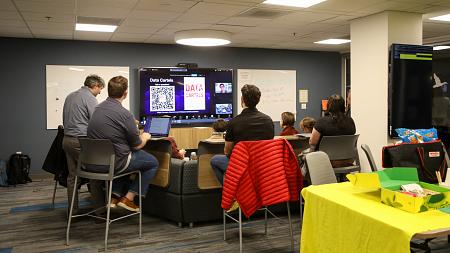
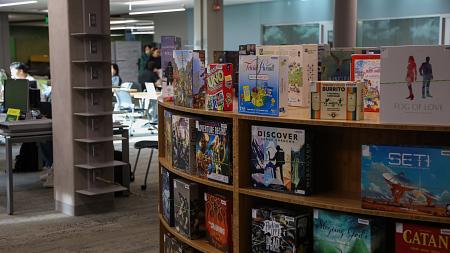
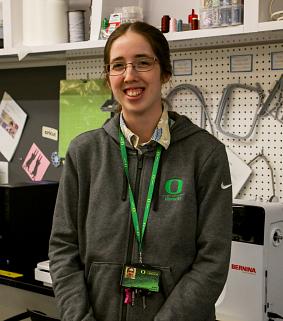
Primarily based in the Science Library, Eowyn Boosinger oversees collaborative learning environments including the DeArmond MakerSpace, the Gaming Center, the VR/AR Lab and the Visualization Lab. Boosinger provides hands-on support for students, maintains and enhances spaces, troubleshoots equipment and supervises events.
“My role also consists of making sure our resources are welcoming and accessible to everyone, no matter the major or academic focus,” says Boosinger.
Among the spaces they manage, the DeArmond MakerSpace stands out as a central hub for hands-on experimentation, offering 3D printers, laser cutters, and sewing machines for students to use.
“We also offer free training sessions and one-on-one help if you are new to the tools,” explains Boosinger. Students can use the MakerSpace for class assignments, career readiness, or personal experimentation with no prior experience required. The goal, Boosinger explains, is to lower the preconceived notions that certain students cannot use these spaces.
The MakerSpace functions as both a learning environment where experimentation is encouraged and a social setting where students can meet new people and collaborate on ideas. For many students, it is their first opportunity to work with these types of tools in an academic setting.
Events and workshops are additional ways for students to experiment with these spaces. Last February, Boosinger helped host Valentine’s Day Craft Week where students learned to create fun projects using different tools in the Makerspace. Mini individual workshops are also available, from tutorials on how to embroider an iron-on patch to how to create 3D-printed objects.
“We are here to help you learn and experiment, even if that means making mistakes,” says Boosinger.
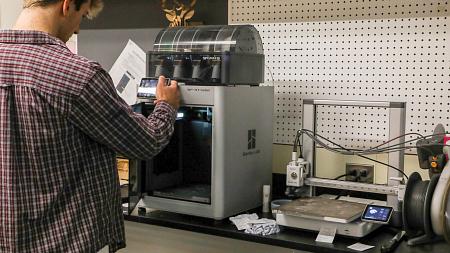
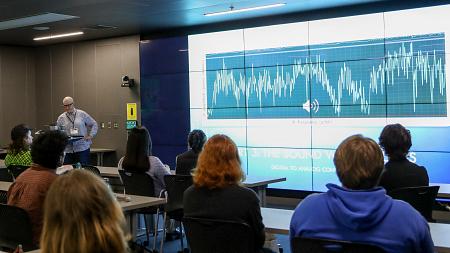
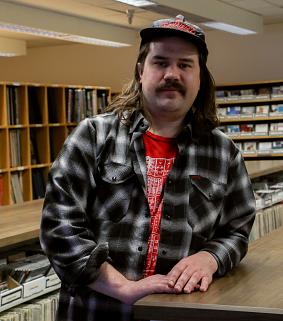
James Daley is the primary manager of Knight Library’s research and learning spaces, including the Douglass Room for musical instruction, the DREAM Lab for digital scholarship opportunities, and the new AI Consultation Station. He also coordinates reservations for these rooms and resources, making sure they remain accessible to students, faculty and campus groups.
Because these spaces are used for everything from classroom instruction to informal learning, Daley places a strong emphasis on communication and student input, as well as encouraging students to interact with the spaces. “We hold a lot of workshops that don't just support our spaces, but also highlight student interests,” says Daley.
Similarly to Murray’s experience, student feedback has directly shaped several of the spaces Daley manages. One example is the keyboard lab in Knight Library's Douglass Room, which emerged after repeated student requests for hands-on access to instruments. “It started with a handful of students simply asking where they might find keyboards,” explains Daley. “We realized we’ve got the space, so all we need is the instruments. And now it's one of the most popular spaces on the third floor.”
For Daley, this responsiveness is central to how research and learning spaces function. He emphasizes that students have more influence than they often realize.
“I think a lot of people don't realize the power of their own influence, either as a student or just somebody who is a library user,” says Daley.
Ultimately, Daley hopes students see the libraries as a place that welcomes their curiosity and direct connection with learning resources.
"We want to focus on the idea that the library is a part of campus that is actively listening and supporting students. The library isn’t just a quiet place to study, but rather a place of learning and experimenting,” says Daley.
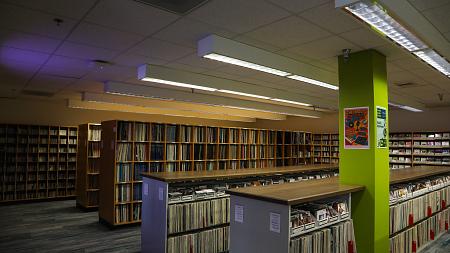
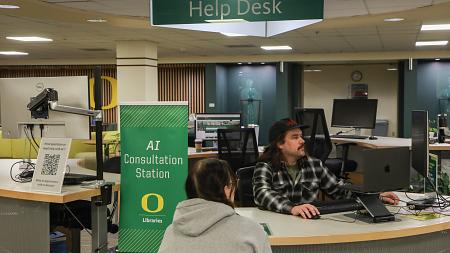
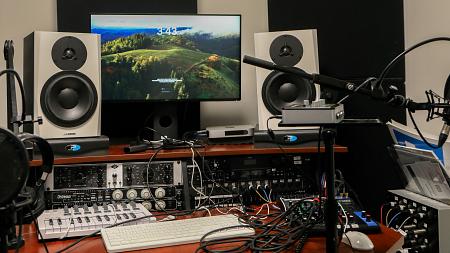
From hands-on tools in the MakerSpace to technology-rich classrooms and a new forum for conversations around AI, UO’s research and learning spaces offer students the tools and opportunities to inquire, explore and create. Staff like Murray, Boosinger and Daley ensure these spaces stay accessible and responsive to student needs, helping to make the libraries a hub for discovery.
Izzy Smith (Class of '26, Media Studies) and Harper Lombard (Class of '26, Advertising and Cinema Studies) are Communications Assistants with the UO Libraries.