
New SCUA Collection Documents Oral History of the Vietnam Anti-War Movement in Eugene
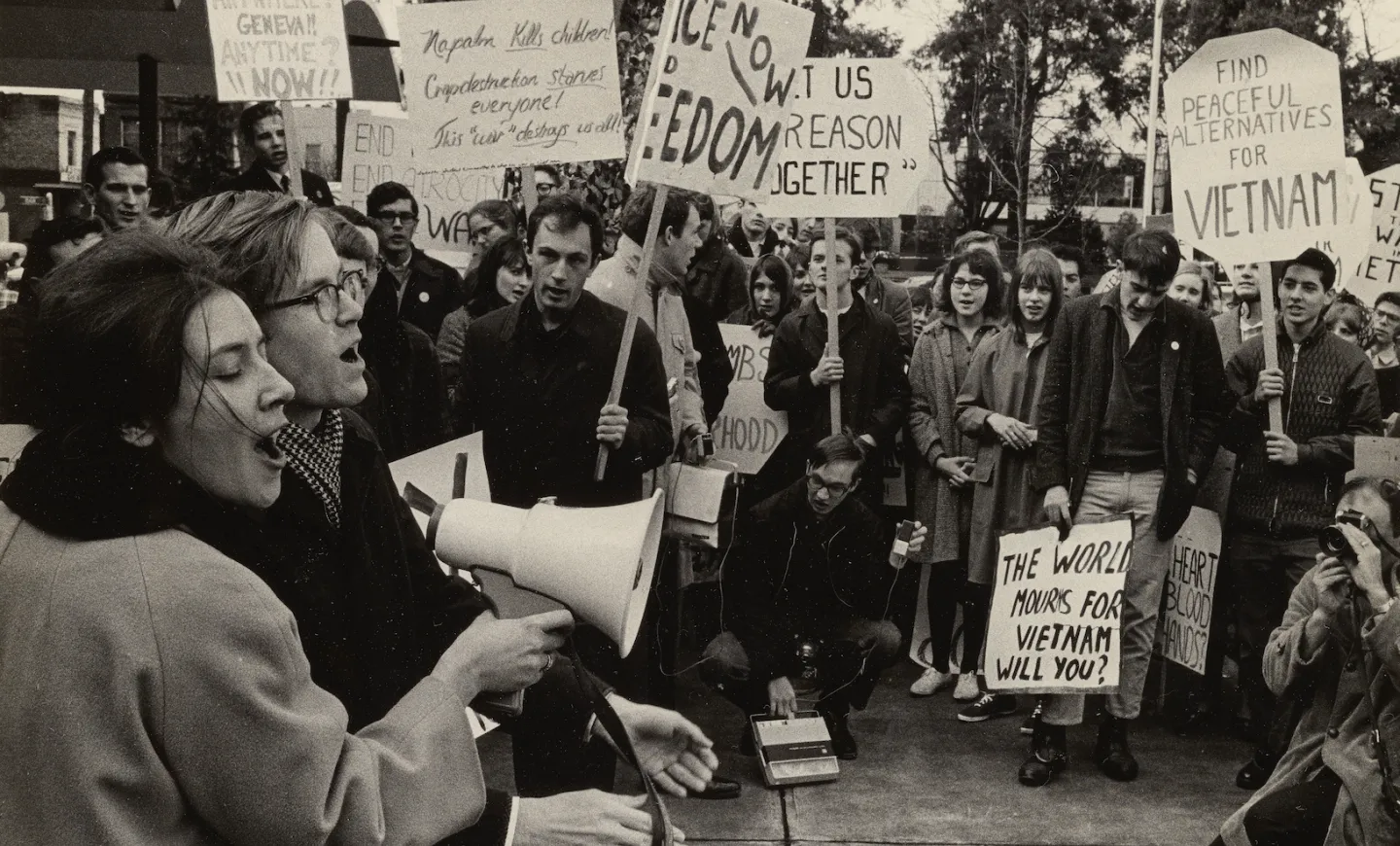
UO Libraries Special Collections & University Archives is pleased to announce the receipt of a new collection, The Eugene Vietnam Anti-War Movement Oral History Project Records, 2023-2025.
The collection comprises transcripts and sound recordings of nineteen interviews with university students, faculty members, war veterans, faith leaders, and community members who participated in the anti-war movement in Eugene from 1969 to 1973. The UO Libraries has made the digital collection available online in recognition of the 50th anniversary of the end of the Vietnam War on April 30, 1975, when most American military and civilian personnel were evacuated from Vietnam after the fall of Saigon to North Vietnamese and National Liberation Front forces.
According to Martin Bennett, who conducted the interviews, “The anti-war movement had a profound impact on U.S policy and contributed to ending the war. These interviews reflect the lived experience of Eugene residents who organized the most successful anti-war movement in American history.”
Bennett was a student at the University of Oregon during the Vietnam War and is now instructor emeritus of history at Santa Rosa Junior College.
The collection chronicles the Eugene anti-war movement and the many educational, electoral, and mass action campaigns against the war, both on campus and in the community. Most interviewees were leaders or members of anti-war organizations, such as Students for a Democratic Society; the Resistance, Clergy and Laity Concerned About Vietnam; Associated Students of the University of Oregon; Vietnam Veterans Against the War; Women’s International League for Peace and Freedom; and The Eugene Augur underground newspaper.
Archivist Nathan Georgitis, who provided technical support for the project, notes, “The collection documents one era in Eugene’s long countercultural history and complements other primary source materials documenting the university in the Vietnam War era. It is the most extensive record we have of a city-wide grassroots movement that transformed public opinion and helped to unseat pro-war Republican Congressman John Dellenback (4th district, which includes Lane County) and elect anti-war Democrat James Weaver in 1974.”
Interviewees reflect on how the anti-war movement impacted their lives and influenced their involvement in later movements, such as labor, environmental, women’s rights, anti-nuclear, and opposition to U.S. intervention in Central America. The interviews also emphasize the ongoing relevance of the Vietnam War anti-war movement for contemporary social change movements and opposition to U.S. foreign policy in the Middle East.
Ron Eachus, who in 1970 was elected president of the Associated Students of The University of Oregon and later served on the Oregon Public Utilities Commission, suggests in his interview that the anti-war movement “created roots and seeds of political activism that exist today […] in all kinds of different movements.”
Interviewees include those who were university students, faculty members, community members, and veterans at that time of the protests. Prominent topics include local and national anti-war protests and actions, including sit-ins and teach-ins, draft resistance and draft card burning, marches and demonstrations, strikes and boycotts, guerrilla theater and mock trials, civil disobedience, and violent activism. Prominent organizations include Selective Service System, Students for a Democratic Society, Women’s International League for Peace and Freedom, Clergy and Laity Concerned About Vietnam, The Moratorium to End the War in Vietnam, The Revolutionary Union, New Mobilization Against the War, Vietnam Veterans Against the War, Eugene Augur, 1968 Democratic National Convention, Radical Action Theater Troupe, Associated Students of the University of Oregon, University of Oregon Senate, and University of Oregon Administration.